An ordinary object becomes useful evidence when you record what is visible, where it belongs and which explanations remain possible. Try a modern possession at home: separate observation from inference, compare two accounts and write a label that another person can challenge.
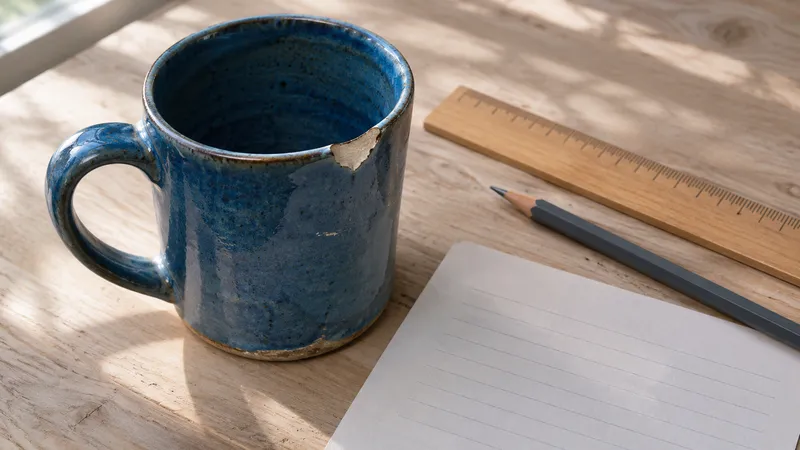
A Cup With A Missing Owner
A chipped mug sits beside the sink. You know whose it is because you have seen them reach for it, complain about the handle and put it back in the same cupboard. Remove those memories and the object becomes surprisingly difficult to explain. Who used it? Was it a favourite, a spare or something borrowed? Why was it kept after it broke?
That small uncertainty opens a much bigger question: how can anyone reconstruct a life from things when the people who used them cannot answer back? Archaeology starts with material evidence, but the interesting work lies in deciding what that evidence can support.
An ordinary object is a useful place to begin. You do not need a gold mask to find a question worth pursuing. A cup, a button or a fragment of packaging can lead towards making, trade, habit, repair and disposal. It can also lead towards a very persuasive story that turns out to be wrong.
First Describe What Is Actually There
For a simple home exercise, choose a modern object you own and can handle safely. A mug, pencil case or reusable bottle will do. Set aside what you already know about it. Write down its material, dimensions, colour, marks and visible damage before attempting an explanation.
Notice how quickly interpretation slips into description. A dark patch is an observation; calling it a burn introduces a cause. A worn edge is visible; saying its owner used it every morning adds a routine. Neither interpretation is necessarily foolish, but they belong in a different part of your notes.
Make two columns, headed observation and possible explanation. Leave room for alternatives. The point is not to forbid imagination. It is to give imagination something firm to work with, and to make it possible for another person to challenge the account without having to start again.
The Place Matters As Much As The Thing
The Society for American Archaeology explains context through the relationship between objects and their surroundings. It describes archaeologists recording an object's location before removing it. That relationship helps turn an isolated item into evidence about activity.
Bring the idea back to your modern mug. On a kitchen shelf it suggests one set of possibilities. Beside a paint tray it suggests another. In a box ready for a charity shop it may be leaving a household rather than serving one. The physical object has barely changed; the surrounding evidence changes the questions.
These are possibilities in a thought experiment, not conclusions about a real excavation. Their value is showing why an attractive object on its own cannot tell the whole story. Ask what stood beside it, what surface supported it and what happened to that place afterwards. A photograph cropped tightly around the object may hide exactly what you need.
An Object Has More Than One Moment
Try writing a short biography of your chosen object. Begin before it entered your home. Someone selected materials, made it, moved it and offered it for sale or gave it away. Then came use, perhaps repair, perhaps storage, and eventually a decision about keeping or discarding it.
You may know only a few of those stages. Mark the rest as questions. A maker's mark could provide a route to research, while a remembered purchase could be checked against a receipt. A stain might be impossible to explain. Keep that difference visible.
This approach makes an everyday possession less static. The interesting question becomes how it moved between people and purposes. An object bought for one job can end up doing another. The history you are trying to understand may include several users, rather than one person whose character can be read directly from the surface.
The Work After Discovery
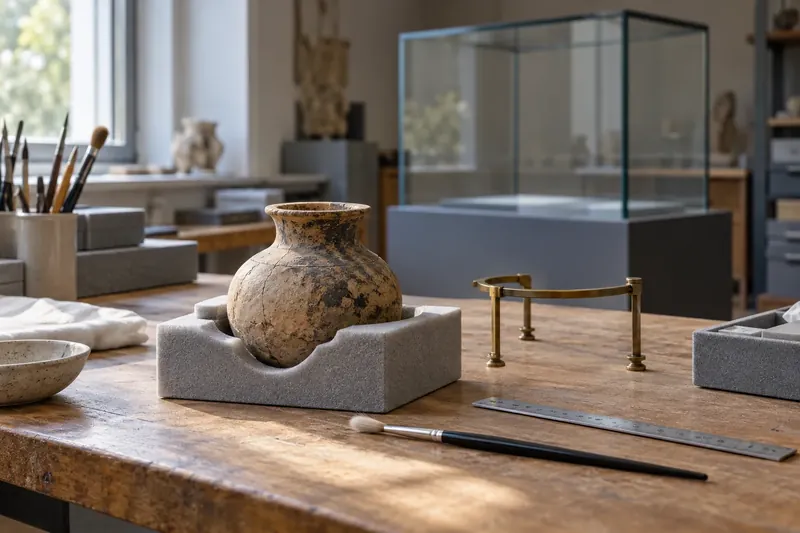
Finding something is only one part of archaeological work. The Chartered Institute for Archaeologists' glossary describes finds processing as a sequence including sorting, cleaning, marking or labelling, recording, packing and boxing. Its definition of an object extends beyond impressive manufactured pieces to material such as waste and plant or animal remains.
That list reveals work often missing from the adventure-film version of the subject. A label, record or package can be crucial to keeping evidence usable. For a student who likes careful systems, there is something worth noticing here: orderly information is part of making an interpretation possible.
Do not turn the glossary into cleaning instructions for something you find outdoors. Different materials and circumstances need appropriate expertise. For the home exercise, use an ordinary possession already in your care. The skill to practise is making a record that someone else can understand, not treating an unknown find.
Build A Record Someone Else Could Use
Give your modern object a simple identifier, such as home object one. Photograph it from more than one angle, placing a ruler beside it if useful. Record the date, who made the record and where the object was when you began.
Now ask someone else to read your notes without seeing the object. Could they distinguish it from another similar item? Would they understand which marks were visible and which details came from your memory? If they cannot, revise the record before adding more interpretation.
This is a small editorial exercise rather than a professional recording standard. Still, it exposes a real intellectual demand: precision must survive a change of reader. A beautiful paragraph that leaves another person unable to identify the evidence is less useful than a plain description with clear measurements and photographs.
Compare Without Rushing To Identify
Suppose your object carries a symbol you do not recognise. Searching for a similar image may help generate possibilities, but resemblance is a starting point. Look for a museum or manufacturer's record that explains the comparison, rather than accepting the first confident caption.
Ask which features match and which do not. Is the shape similar but the material different? Does the comparison have a known date, or is the date itself uncertain? Are you comparing a whole object with a fragment whose missing parts could change the interpretation?
Write down one reason your preferred explanation might fail. That question can feel irritating when you have found an exciting match. It is also what keeps the exercise interesting. The aim is an explanation that can withstand scrutiny, not a search result that lets you stop looking.
What Would Change Your Mind?
Choose two plausible accounts of the object and identify the evidence each would need. A worn cup could have been used frequently, but its damage might also come from an accident. A repaired item could have been valued, yet the repair alone does not tell you whether that value was emotional, practical or financial.
You do not need to assign numerical probabilities. Explain what observation would make one account more convincing. A photograph showing long-term use, a purchase record or another person's recollection might help, although each has its own limits.
This is where the exercise begins to resemble work in other subjects. You are comparing explanations, looking for evidence that distinguishes them and allowing uncertainty to remain. Someone who enjoys that process has learned more about their interests than they would by simply announcing that they like history.
Missing Evidence Is Part Of The Story
Your record will contain gaps. Perhaps the packaging was thrown away, the receipt faded or the original owner forgotten. Resist filling every space just because a complete narrative feels more satisfying.
Try reading your account twice. First, underline statements supported directly by the object or a document. Then circle claims that depend on memory or inference. If the circles carry most of the story, shorten the conclusion or describe what additional evidence would be needed.
The Society for American Archaeology's overview includes both ancient and recent human material remains. That breadth helps loosen the assumption that archaeology concerns only remote civilisations. It also makes the modern exercise a useful prompt: even a familiar household object can become hard to interpret surprisingly quickly when its surrounding information disappears.
Which Part Of The Work Holds Your Attention?
After recording the object, ask which task you wanted to continue. Was it drawing and measuring, following the possible journey of materials, organising the record, comparing explanations or finding a clear way to communicate the uncertainty?
Those preferences can guide further exploration without settling a career. Someone captivated by a finished museum display may discover that the underlying research appeals more, or less, than expected. Someone who thinks they dislike history may enjoy the evidence problem once it becomes tangible.
For a next step, inspect an archaeology course's actual modules and assessment methods, or look for a museum activity with a clear public learning purpose. Check the current provider's requirements before planning participation. This article offers a way to explore the work; it does not establish an entry route, employment prospect or qualification requirement.
Try The Twenty-Minute Object Challenge
Spend five minutes describing your modern object and five recording its surroundings and known history. Use the next five to create two possible explanations for one feature. In the final five, write a label of no more than eighty words.
The label should tell a reader what the object is, what you can support and what remains uncertain. Include one question you would investigate next. Ask a family member to point out any sentence that sounds more certain than the evidence allows.
Then swap roles. A second person may notice a feature you missed or challenge an assumption you thought was obvious. Keep both versions of the label. The revision is part of the result: it shows how an account changes when someone else can inspect its foundations.
Can I Practise By Collecting Old Objects Outdoors?
Use your own modern possessions for this exercise. The Archaeological Institute of America warns that moving an object from its original context can damage the evidence. Its public guidance recommends noting the location and contacting a suitable local organisation instead of picking it up. Local rules and reporting duties differ; seek the relevant local authority's guidance for an actual discovery.
Do I Need To Know The Answer Before Starting?
No. Begin with a description and a question you can investigate. A useful result might be a narrower explanation, a rejected idea or a clear account of what cannot yet be established. The record should make your reasoning visible, even when the conclusion remains open.
Your Next Step
Choose one object today and write its eighty-word label. Tomorrow, read it as though you have never met its owner. Which parts could a stranger verify? Which depend entirely on information that lives in your head?
That gap is the intriguing part. An ordinary possession connects material, work and everyday choices, but it does not explain itself. Learning to ask it better questions can turn a passing interest in the past into something you can actually try.
Keep Exploring
Follow the work beyond the evidence record in How A Museum Object Reaches Its Display Case. If the subject interests you, How To Read A University Module Catalogue Without Getting Lost helps turn that curiosity into course questions. For another exercise in checking an explanation, try When To Cite AI Assistance In A School Assignment.