Explore food science by following one product question through evidence, communication and training routes. A safe packaging-based exercise can reveal which tasks interest you without pretending to validate a product or settle your career choice.
The Product Is Familiar. The Questions Are Not.
Pick up an ordinary supermarket product and imagine being asked to change it. Make it less expensive, more convenient or easier to transport. Keep the qualities people like. Explain how you would know whether the change worked.
Suddenly the familiar packet becomes a problem with several moving parts. A pleasing first mouthful is only one consideration. You need questions about ingredients, production, packaging and the information a customer receives. The interesting career question is which of those problems you would enjoy investigating.
Food science offers a way into that exploration. You do not have to begin with a dream of running a restaurant or a lifelong fascination with recipes. Start with curiosity about why a product behaves as it does, then look for the scientific work behind the answer. The next question is yours to choose.
Follow A Question Rather Than A Job Title
The National Careers Service describes food scientists and technologists as people who develop food and drink products and help ensure they are safe. Its profile includes recipe development, sample testing, nutritional information, production improvements and investigations into quality problems.
Those tasks give a student several different doors to open. Someone attracted to experiments might investigate measurement. Someone who enjoys solving practical problems might look at how a process is organised. Someone who likes explaining complicated findings might examine how technical information reaches other people.
Do not turn that first preference into a permanent identity. Choose one task and ask what a beginner would need to understand before attempting it. That produces a better exploration plan than deciding immediately whether the entire occupation sounds impressive.
Imagine A Development Brief
Suppose a manufacturer is considering a different version of a packaged snack. This is a hypothetical brief, with no claim about a particular brand. The proposal sounds simple: change the product while keeping it appealing to existing customers.
Write down what the brief leaves unanswered. What must stay the same? Which change matters most? Who will judge the result? What would count as an unacceptable trade-off? Before proposing ingredients, you have already begun a useful piece of technical thinking: making a vague request precise.
A student can practise this part without handling food at all. Draft a one-page specification containing the intended customer, the proposed change, the information still needed and the tests a qualified team would have to consider. Resist the temptation to present an attractive idea as a finished solution.
An Observation Is Not Yet An Explanation
Imagine that two versions look different after being stored according to their respective instructions. You have noticed a difference. You have not established its cause. Perhaps several aspects of the products differ, or the conditions were not comparable.
This distinction makes a useful bridge from school science to career exploration. List the observations first, then possible explanations, then the evidence needed to distinguish between them. A photograph may record appearance; it cannot by itself establish what happened chemically or microbiologically.
For an initial project, use published information and packaging rather than home storage experiments. Never taste questionable food, deliberately leave perishables unrefrigerated or attempt to culture microorganisms. There is plenty to investigate through questions and records without trying to recreate a professional safety laboratory.
Read The Packet As A Set Of Decisions
GOV.UK’s food-labelling guidance says labels must be accurate and must not mislead. Its overview directs readers to information about dates, allergens and other labelling categories. That makes the packet a useful starting point for understanding responsibility as well as design.
Choose a product already in your household and read the complete label. Note the product description, ingredients, storage instructions and any directions for use. Put a question beside information you do not understand. You are studying what is communicated, not deciding whether the manufacturer has broken a rule.
Now separate what the packet explicitly tells you from what you are assuming. A bright colour or appealing photograph may influence your expectation, but it does not provide the missing evidence. This habit is valuable well beyond food: record the actual claim before judging it.
The Work Also Happens Between People
Skills England’s occupational map for food industry technical professionals describes work across development, quality, manufacturing, supply chains and commercial teams. It also identifies communication with suppliers, customers, auditors and regulators. The work is not confined to a solitary person having ideas at a bench.
Consider how you would explain an uncertain result to someone waiting for a decision. Would you be comfortable saying what is known, what remains unresolved and what should happen next? Could you make the explanation clear without hiding its limits?
Try writing the same short finding twice: once for someone with scientific training, once for a colleague who needs to make a practical choice. Keep the facts consistent. Changing the language for the reader should not turn uncertainty into certainty or remove a limitation that matters.
Compare The Work You Want To Practise
Build a personal comparison using three columns: question, activity and evidence of interest. Under question, write something you genuinely want to understand. Under activity, choose a manageable way to explore it. Under evidence, record what you actually did and what you wanted to investigate afterwards.
For example, a question about how a product is described could lead to a label comparison. A question about manufacturing could lead to reading an official occupational standard and identifying unfamiliar process terms. A question about scientific study could lead to comparing two university module lists.
The point is not to award yourself a suitability score. Notice whether the detailed work makes you more curious. If the appealing career title fades when you encounter documentation or careful comparison, that is useful information for choosing the next task.
Look At Routes With A Specific Task In Mind
The National Careers Service lists university study, apprenticeships and progression through work as possible entry routes. It mentions food-related qualifications and related scientific backgrounds. These are starting points for research, not a promise that every course or vacancy accepts the same subjects.
Choose two actual routes and inspect their current official requirements. Record the qualification, location, study pattern, application year and evidence requested. For an apprenticeship, check the employer’s live advert and training arrangement. An occupational standard describes a route; it does not establish that a local vacancy is open.
For a degree, move past the title. Which compulsory modules teach the work that interested you? What practical facilities and assessments are described? If placement opportunities matter, ask how allocation works. Keep unanswered questions visible instead of treating an attractive prospectus phrase as a guarantee.
Turn Your Notes Into A Useful Work Sample
Give the project a clear title and date. Include the question, the material you examined and a short account of how you organised the information. Someone reading the work should be able to distinguish a label observation from a statement checked against an official source.
Add a small limitations section beside the conclusion. Perhaps you examined only one product, used no manufacturer interviews and performed no laboratory work. Those limits do not make the exercise worthless. They show that you understand what your evidence can support and what a different investigation would require.
Before putting anything in a portfolio, remove household details and unnecessary identifying information. Link to sources rather than copying entire pages. Explain the thinking in your own words. A neat document with unexplained claims is less revealing than a modest piece of work whose reasoning is visible.
Then ask a teacher or adviser for feedback on one specific issue: whether the question is clear, whether the evidence matches the conclusion or whether the next step is realistic. Revise that part and keep a brief record of the change. The finished result can show careful inquiry without claiming professional expertise.
A Twenty-Minute Product Question Exercise
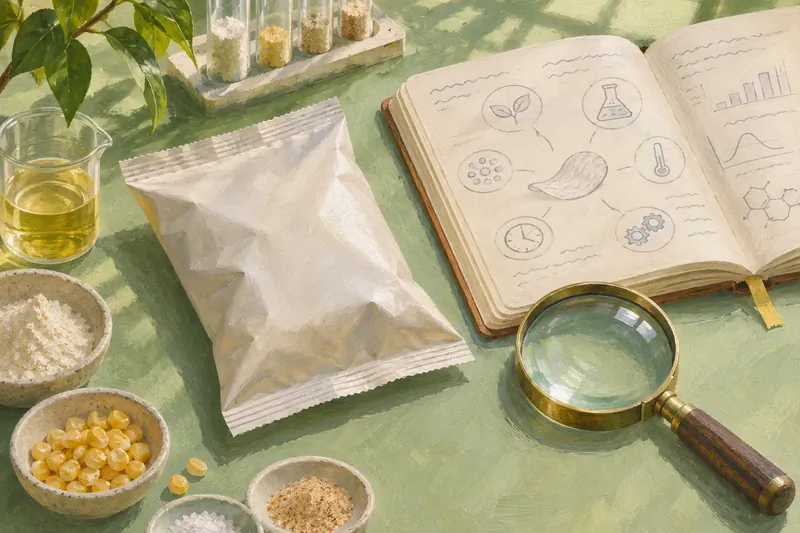
Set a timer and choose one unopened product as a reference object. Spend five minutes recording only information visible on its packaging. Spend another five listing questions about the decisions behind that information. Keep observation and interpretation on separate lines.
Use the next five minutes to sort the questions into three groups: things an official source might explain, things a course could teach and things only the manufacturer could answer. Finally, select one question you can investigate responsibly this week.
Finish with a short note explaining why you chose it. Did you enjoy comparing evidence, spotting ambiguities, organising the problem or imagining a different product? Your response gives the next exploration some direction. It does not need to end with a declaration that food science is your future.
How A Parent Can Make The Exploration Better
Instead of asking whether this is now the chosen career, ask which part of the exercise held the student’s attention. Invite them to show one interesting observation and one question they could not answer. Allow an unfinished conclusion.
You can help with practical constraints separately: travel, course costs, available subjects or the time needed for further reading. Those matters deserve attention, but they should not be disguised as a judgement about whether the student’s curiosity is serious enough.
If the student loses interest, find out where. Disliking one activity does not settle every possible role in the sector. Equally, liking a single packaging exercise does not establish that a demanding scientific course will suit them. The useful outcome is a sharper question, followed by a small and realistic next step.
Does Enjoying Cooking Mean This Career Will Suit Me?
It can supply questions worth exploring, but enjoyment of cooking alone does not tell you how you will feel about analytical work, technical records or production problems. Read the actual tasks and try a small evidence-based activity before drawing a conclusion.
Do I Need To Choose A Degree Immediately?
No. Start by comparing current official routes and their requirements. Note which subjects and qualifications each one expects, then discuss gaps with a school or careers adviser. Keep the entry year attached to every requirement you save.
Can My Project Prove A Product Is Safe?
No. A packaging comparison or desk research project cannot validate food safety. Keep your conclusions within what you actually examined. If your question requires laboratory testing or specialist interpretation, identify that requirement rather than claiming to have met it.
Your Next Step
Choose one product question and one official route to investigate this week. Write a paragraph connecting them: what work interests you, what you still need to learn and which evidence would help you decide whether to continue.
You may discover that you care more about scientific measurement than product invention, or more about explaining evidence than designing a new recipe. You may simply become a more thoughtful reader of a familiar packet. Either way, an ordinary object has given you a more precise way to explore a less familiar career.
Keep Exploring
For another example of hidden specialist work, read How A Museum Object Reaches Its Display Case. For a different scientific distinction, try Weather Forecasting And Climate Research Are Different Jobs. To think about what a modest practical investigation can reveal, read The Project That Revealed More Than A Career Test.