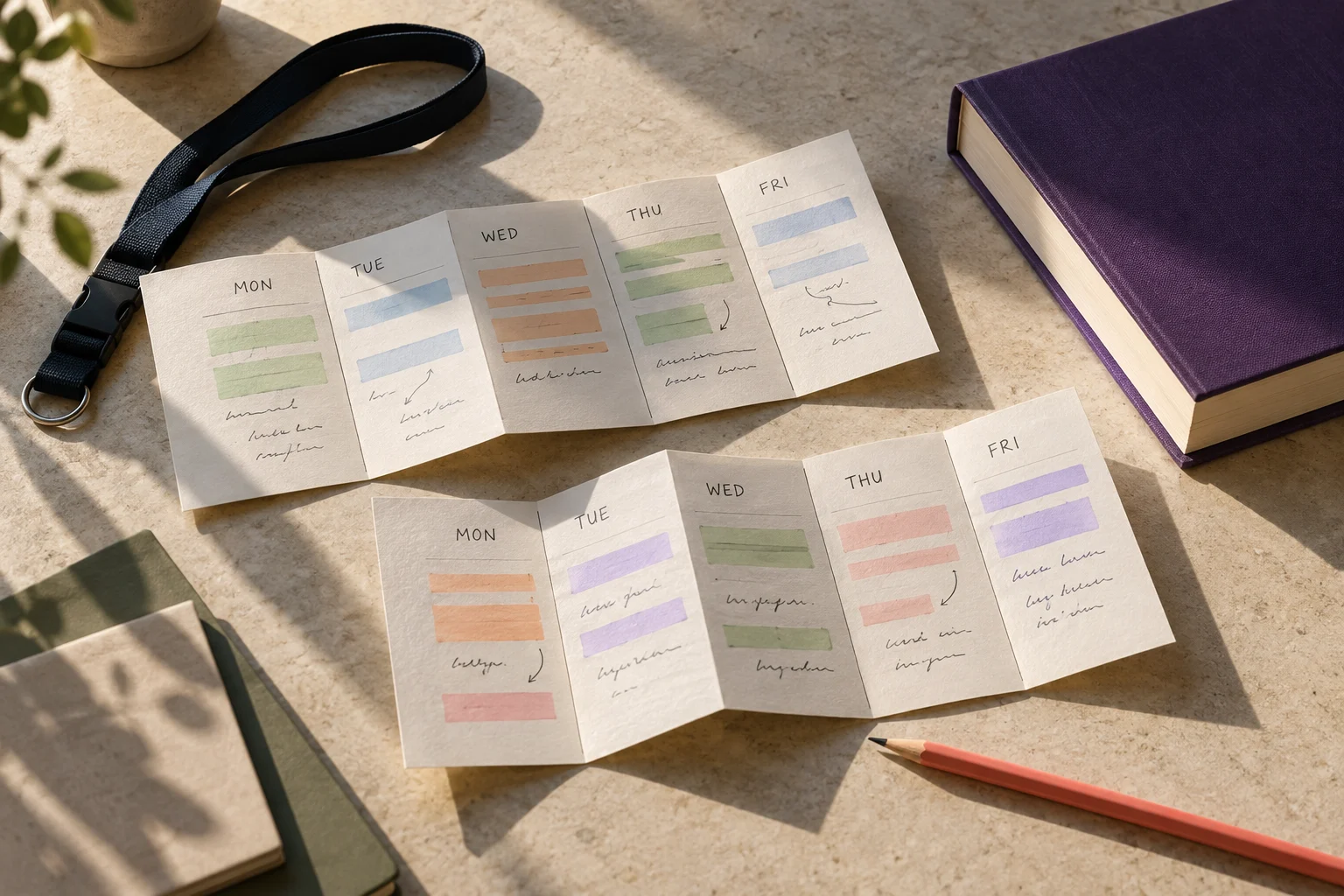

Build a private evidence folder around one accessible source, a question, a modest piece of work and an honest reflection. It can support subject exploration without workplace connections. Check course-specific requirements separately: independent projects and virtual activities must not be misrepresented as internships or assumed to replace required experience.
An Unanswered Placement Email Does Not End Your Exploration
When classmates discuss internships arranged through family contacts, a student without those connections can feel that the useful work has already been allocated. A practical response is to separate two questions: what access have you been able to obtain, and what can you investigate now? They are connected, but they are not identical. This guide proposes a private evidence folder for subject exploration. It is not the employer-facing digital-design portfolio discussed in Clued's separate guide, nor a claim that independent work replaces every required placement. A course may have specific experience or portfolio requirements. Check those directly. The aim here is to create an honest record of learning that does not depend on someone opening a workplace door.
Define The Purpose Before Choosing Activities
Write one sentence about what you want to understand. You might investigate how a business compares costs, how historians judge conflicting accounts or how engineers test a simple structure. These are original illustrative prompts, not assignments endorsed by a university. Choose a question you can explore safely with accessible material. Then decide what the folder is for: making a subject choice, preparing for a discussion or supporting reflection for an application. Those purposes need different material. A university may never ask to see the folder itself. Do not submit extra documents unless its instructions allow them. A useful private record should help you explain your thinking, not create another pile of certificates to collect.
Find An Accessible Starting Source
UCAS identifies several ways to explore a profession or subject, including reading, online lectures and virtual activities, and encourages reflection on what was learned. Oxford's supercurricular hub similarly offers different kinds of resources for subject exploration. Neither requires you to pretend that watching a lecture was an internship. Choose one accessible resource and check its author, date and purpose. Start with a public university page, library material or another source you can trace. Check costs, access conditions and age restrictions before joining an activity. A free introduction is enough to begin; a paid completion certificate is not the evidence of understanding this exercise is looking for.
Turn Watching Or Reading Into A Question
After the first resource, write three short notes: the idea you understood, a claim you want to examine and a question that remains. Use your own words and keep the source details. If the material was too advanced, note where you lost the argument and look for an introduction to that concept. Do not treat difficulty as proof that the subject is unsuitable. You may simply need background knowledge. Equally, recognising a familiar topic does not establish mastery. The next task should reveal something more specific. For example, compare two explanations, attempt a related problem or identify which evidence would be needed to answer the question. Keep the activity small enough to finish and discuss.
Make One Modest Piece Of Work
Choose an output that fits the question. A one-page comparison, a short calculation with assumptions or a labelled paper model can be enough. State what you were trying to examine and which materials you used. Avoid an ambitious survey, a medical experiment or collecting sensitive personal data merely to make the project look serious. For an illustrative economics exercise, you might compare how two published explanations describe the same policy trade-off. For history, examine how two sources support different interpretations. These are proposed learning tasks, not completed investigations or evidence of any student's results. Write down the limitations before drawing a conclusion. An output is useful when you can explain it, including what it cannot establish.
Keep A Learning Receipt Rather Than A Prestige List
For each activity, record the date, source, question, work produced and next step. Add a brief reflection describing what changed in your understanding. If nothing changed, say what remained difficult or unconvincing. The record should distinguish participating in an activity from demonstrating a particular skill. Cambridge's undergraduate guidance says reflections on subject exploration matter more than the number of activities pursued. That is advice from one institution, not a universal admissions scoring rule. Its practical implication for this folder is to develop a small number of useful questions rather than expanding the list indefinitely. There is no need to copy a classmate's expensive programme to make your own learning worth discussing.
Use What You Already Do Without Inflating It
Schoolwork, a part-time job, family responsibilities or helping with an ordinary event may provide material for reflection. UCAS's personal-statement guidance for 2026 entry onwards recognises different kinds of preparation outside education and asks applicants to explain their usefulness. Relevance and accurate description matter. Do not rename ordinary participation as leadership, turn assisting into founding an organisation or imply that a family responsibility gives professional expertise. Nor must you disclose private family details to make an application feel compelling. Choose only what you are comfortable sharing and explain a specific connection to the subject. This exercise does not assess an individual's eligibility, predict an offer or tell you that one experience compensates for a missing academic requirement.
Ask For Feedback That Does Not Require A Famous Mentor
A teacher, librarian or appropriate trusted adult may be able to help you locate material or identify an unclear explanation. Ask a bounded question, such as whether your comparison separates evidence from opinion. Respect their time and accept that they may not be able to review the work. You do not need an endorsement to continue learning. Record feedback accurately and distinguish it from your revision. If someone points out an error, keep the corrected version and explain what changed. Do not invent comments, quote someone without permission or claim that informal feedback constitutes independent expert verification. A clear account of an error you corrected can be more useful for discussion than an unexplained finished page.
Use Virtual Activities With The Right Label
If an accessible virtual programme fits your question, inspect what it actually involves. Check the provider, expected time, permitted age range, costs and whether the activity is currently available. A programme may offer insight or a simulated task without placing you inside an employer's real work. Describe the arrangement precisely. Do not claim employment, client responsibility or an internship when you completed an online simulation. Ask what you learned about the task, what remained simplified and what you would need to investigate in a real setting. No opportunity is recommended here on the basis of a logo alone. If a course specifically requires certain experience, seek clarification from its admissions team rather than assuming a virtual activity meets the requirement.
Build A Two-Week Plan That Fits Your Actual Life
Choose a small sequence: one resource, one question, one output and one revision. Place it around existing study and responsibilities, with a stopping point. This is an editorial planning suggestion, not an evaluated programme. If access, disability, caring commitments or equipment limits change what is practical, adapt the task rather than hiding the constraint. At the end, review what you can explain without looking at the original material. Identify one uncertainty and decide whether another task is worthwhile. Avoid continuing only because the folder looks short. The point is to support a better next decision: another subject resource, a course question, a modest project or a placement search with a clearer purpose.
Your Next Step Is A Question You Can Pursue
Create a folder with three headings: sources, work and reflections. Add one source you can access this week and write a question it raises. Keep the first output modest and label its stage honestly. You have begun when you can show what you explored and what you want to understand next. Clued's project exploration guide, EPQ scope guide and parent work-experience guide offer related planning tools. Connections can affect access, and this folder does not remove that inequality. It does give you a practical place to begin without inventing experience or waiting indefinitely for someone else's permission. Save the original version before revising it so the development of your thinking remains visible. You can keep the entire folder private while deciding which parts, if any, are appropriate to share.
Sources And Further Checks
Primary sources checked on 06-10-2026. Course and policy details can change; check the current official information before acting.
UCAS: Work Experience And Volunteering Oxford: Supercurricular Hub Cambridge: Improve Your Application UCAS: Personal Statements, 2026 Entry OnwardsAI-assisted production. How We Produce Stories · Report A Correction