A sound designer helps shape how a film communicates through sound. Explore the work by making two sound versions of your own short scene, documenting choices and revisions, then comparing course content and actual entry-role conditions rather than relying on a job title.
Start With A Door, Not An Explosion
Imagine a short film in which someone enters an empty room, hesitates and leaves. Nothing spectacular happens. Yet the same pictures could suggest comfort, danger or disappointment depending on what you hear. A latch can feel heavy or fragile. A room can seem busy beyond the frame or strangely isolated. The important career question is not whether you enjoy dramatic soundtracks. It is whether you want to make, organise and revise decisions that help an audience understand a scene. This is an original illustrative production exercise, not an account of a real film or a claim about a named professional. Begin with an ordinary doorway because it makes the work easier to inspect. You can ask what each sound contributes without being distracted by spectacle. You can also discover whether you enjoy the less glamorous parts: listening repeatedly, naming files, moving a sound slightly and explaining why one version serves the picture better.
Sound Design Is Part Of A Production Chain
ScreenSkills places sound within post-production, alongside picture editing and other finishing work. Its role map separates sound assistants, editors, Foley artists and supervising sound editors. That distinction matters to someone choosing a course. Sound design is not a single isolated job in which a person adds everything after everyone else has finished. Use the credits of a film you can legally watch as a starting point. Note the sound-related titles without assuming that each production divides responsibilities identically. Then investigate two of those roles through their official profiles. A title tells you where to begin asking questions; it does not establish someone's exact contribution to that particular film. Avoid reverse-engineering a production's working methods from a credit list alone. Think of your own small exercise as a chain of handovers. Someone supplies the picture, someone records material, someone edits it and someone checks how the elements work together. One learner may perform several functions, but keeping them separate on paper helps reveal which kind of work attracts you.
Listen Before You Collect
For the doorway exercise, write a listening plan before recording anything. Divide a page into sounds visible in the picture, sounds suggested outside it and deliberate absences. The first group might include a handle and footsteps. The second could include distant traffic. The third might be the moment a previously audible background stops. These are creative possibilities, not technical prescriptions. You do not need every category in every scene. Ask what the audience needs to notice, what they should understand and what should remain uncertain. A sound can be realistic yet unhelpful if it distracts from the action. Conversely, a restrained choice may communicate more clearly than a crowded collection of impressive effects. Make two intentions explicit: one version in which the room feels familiar and another in which it feels unfamiliar. Keep the picture unchanged. This creates a useful comparison because you can discuss the choices themselves rather than claiming that one recording demonstrates natural talent. The goal is to practise intentional listening and explanation.
Understand What Foley Adds
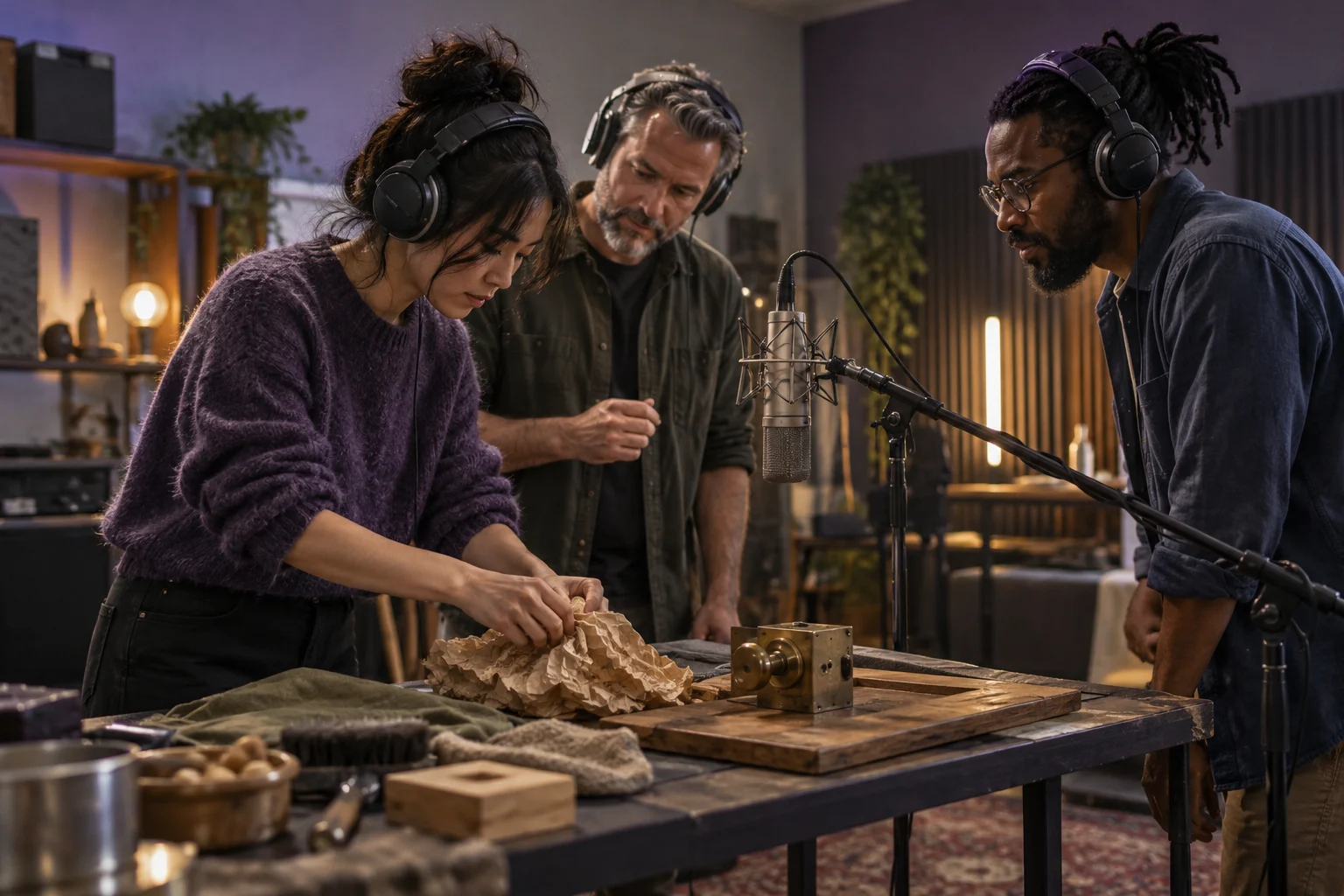
ScreenSkills describes Foley artists as making physical sound effects for screen productions and working with recording and editing colleagues to fit those effects to pictures. This is a distinct practical craft within the broader sound process. Try a safe miniature version with objects you already own. Record a light tap, paper movement and a soft footstep. Do not damage property, enter unsafe locations or attempt loud effects. Work at a comfortable listening level and stop if listening becomes uncomfortable. There is no reason to recreate a hazardous action to explore how sound supports an image. Listen to each recording without the picture first. Then place it against your own short video. Does its character suit the movement? Does its timing draw attention to the wrong moment? Note the difference between making an interesting noise and making a useful choice for a scene. Keep the original recording as well as the edited version so another person can see what you changed. This turns a novelty experiment into evidence of a process.
Editing Is Also A Decision About Attention
A beginner's first temptation may be to add more material whenever a scene feels weak. Try the opposite experiment. Remove one layer and describe what becomes easier to follow. Then restore it and explain what it contributes. Neither version needs to win permanently; the comparison teaches you to justify a choice. ScreenSkills notes that there is no single set route into sound editing and that some people progress from runner roles in post-production houses. That is useful context, not a promise that a particular first job leads to an editing career. When looking at an opportunity, inspect the actual responsibilities, supervision and opportunities to learn. For your exercise, make an edit log with three entries: what changed, why you changed it and what still needs checking. Avoid writing only that the result sounds better. Be specific about the intention. Perhaps a shorter pause makes the entrance feel hurried, or a quieter background lets a small movement become noticeable. Those are observations about your versions, not universal rules for filmmaking.
Collaboration Changes The Brief
ScreenSkills describes supervising sound editors working closely with the director, picture editor and post-production supervisor. The work therefore involves communication as well as sound. A learner should practise receiving a request, clarifying it and delivering a revision someone else can understand. Ask a willing friend or family member to watch your two versions. Explain that this is a learning exercise and ask one bounded question: what difference did you notice? Do not coach them towards your intended answer. One person's reaction is feedback, not evidence of how an audience generally responds. If they describe a different effect from the one you intended, record the mismatch. Ask which moment led them to that impression. You can then change one element and compare again. This is more informative than defending the first version or declaring the viewer wrong. A useful collaborator can keep an intention in view while accepting that a particular execution has not communicated it clearly.
Build A Small Portfolio With A Clear Trail
A first portfolio item does not need to impersonate a commercial production. Use your own footage and recordings, or materials whose licences clearly permit the intended use. Record the permission or licence alongside each borrowed asset. Do not assume that an online clip or downloadable sound is free to republish. Prepare a short package: the silent picture, the two versions, a source list and a paragraph explaining the choices. Say exactly what you made yourself and what came from elsewhere. If another person contributed, credit the contribution accurately and obtain their permission before sharing identifiable material. Keep the package small enough that someone can understand it without a long introduction. The strongest learning evidence may be a clearly explained revision rather than an elaborate finished soundtrack. Never label the exercise professional client work, invent a director's endorsement or imply that a family member's reaction proves employability. It is evidence that you have begun exploring the tasks and can discuss what you learned.
Compare Courses Through The Work
If the exercise interests you, compare actual course modules and facilities rather than choosing by a broad media or music label. Ask which work is compulsory, what students produce, how feedback is delivered and what access to equipment is available outside taught sessions. Request current information for the entry year you are considering. A course containing sound does not automatically offer the same depth as another course with a similar title. Equally, specialist equipment on a prospectus page does not tell you how often an individual student will use it. Ask for the distinction between demonstrated facilities, supervised practice and independent access. Read Clued's guide to module catalogues to turn those questions into a comparison. Add total costs, travel and any required equipment to the same page. You are comparing a learning arrangement, not buying a list of machines. No course can remove the need to practise, collaborate and demonstrate your work, and this article makes no employment guarantee.
Ask About Entry Conditions As Well As Entry Routes
When considering a placement or junior opportunity, ask what the person will actually do during an ordinary week. Who checks the work? Which tasks require prior knowledge? What training is provided? What are the hours, pay arrangements and practical costs of attending? Seek written answers to questions that affect whether the opportunity is workable. A role described as a way into the industry still needs scrutiny. Do not infer that unpaid work is necessary or appropriate simply because a career profile mentions progression from junior roles. Employment status and rights depend on the actual arrangement; seek current official guidance for the relevant jurisdiction if those questions arise. Clued's beginners feature offers a way to inspect the training behind an entry-level label. Pair that reading with your own task notes. You may discover that recording interests you more than editing, or that organising a clean handover is unexpectedly satisfying. Either observation gives you a better next question than simply wanting to work in films.
Keep A Handover Someone Else Can Use
Before calling the exercise complete, imagine handing it to a classmate who has never seen your folder. Could they find the picture, identify the latest version and understand which sounds are original? Make a short contents note. Use consistent names and keep experiments separate from the version you intend someone to review. These are suggested learning habits, not a claim that every studio uses the same system. Then ask the classmate to describe what they would need before making another revision. Missing information is useful feedback. Perhaps you forgot to identify a borrowed recording, or your note describes an intention without pointing to the relevant moment. Correct the package while the project is still small. This tests a different interest from making sounds: whether you enjoy helping another person continue the work accurately. A production career can involve both, and a course comparison should leave room to ask how students practise collaboration as well as individual craft.
Your Next Step Is One Explainable Revision
Give the doorway exercise a modest stopping point. Finish two short versions, make one revision after feedback and write five sentences about the process. Describe the intended effect, the materials used, the contribution you made, the feedback received and the question you would investigate next. You do not need to purchase software, enrol immediately or turn the exercise into a public identity. A small private test is enough to reveal whether you want another encounter with the work. For a parent, the useful response is to ask what the learner noticed and which task they want to repeat. Avoid treating enjoyment of the experiment as a binding career commitment. Clued's project-based exploration guide explains why practical evidence can make a broad interest more specific. Sound design offers precisely that opportunity: an ordinary scene becomes a set of choices you can inspect. The next decision is whether you want to keep listening, making, explaining and revising—not whether you can already name your eventual job.
Sources And Further Checks
Primary sources checked on 30-10-2026. Course and policy details can change; check the current official information before acting.
ScreenSkills: Post-Production ScreenSkills: Foley Artist ScreenSkills: Sound Editor ScreenSkills: Supervising Sound EditorAI-assisted production. How We Produce Stories · Report A Correction